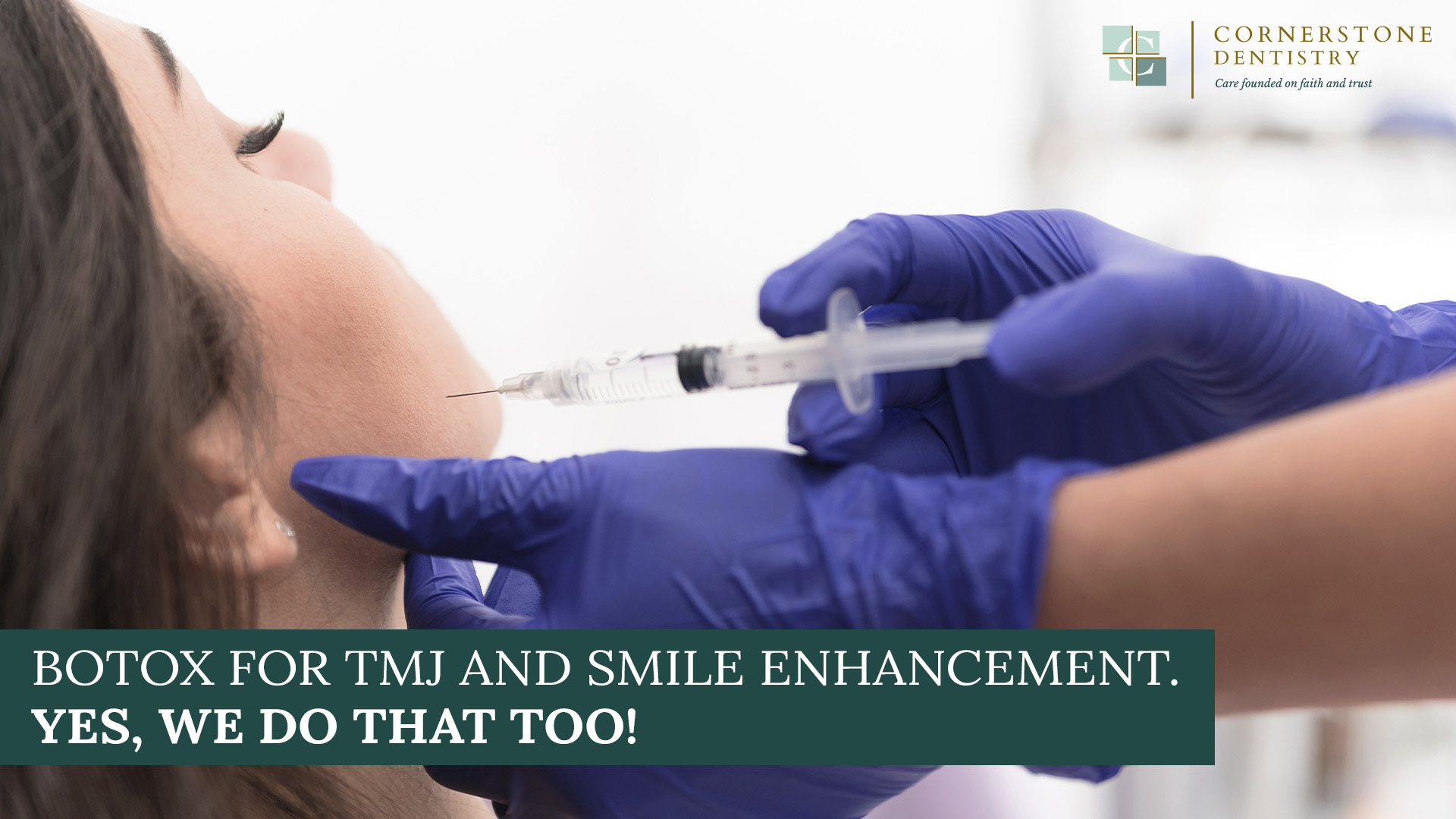
 Most people hear “Botox” and immediately think of forehead lines. But in a dental office, Botox can be about something much more practical: helping calm overworked jaw muscles that contribute to TMJ discomfort, clenching, and tension headaches. And yes, it can also be used for subtle smile enhancements when it’s a good fit.
Here’s how Botox works in dentistry, what it can help with, and what to expect if you’re considering it at Cornerstone Dentistry in Covington, LA.
Why Botox belongs in a dental office (for the right patients)
Dentists spend a lot of time evaluating the muscles and mechanics of your bite. If you clench, grind, or have jaw tension, those patterns show up in the wear on your teeth, your jaw joints, and your muscles.
When Botox is used responsibly, it can be one more tool to support comfort and function, not just appearance. The key is patient selection and proper training. Botox isn’t a “one-size-fits-all” solution, and it’s not the first step for everyone, but for the right person, it can make a noticeable difference.
TMJ, clenching, and masseter tension: the quick explanation
“TMJ” technically refers to the temporomandibular joint (the joint that connects your jaw to your skull). When people say “I have TMJ,” they’re usually talking about TMD (temporomandibular disorder), which can include symptoms like:
- jaw soreness or tightness
- clicking or popping
- headaches or facial pain
- difficulty opening wide
- worn or cracked teeth from grinding
One major player here is the masseter muscle, a powerful chewing muscle along the sides of your jaw. If you clench or grind, those muscles can become overactive, tight, and fatigued.
How Botox may help TMJ symptoms
Reducing muscle overactivity
Botox works by relaxing targeted muscles. In TMJ-related cases, it can reduce the intensity of clenching and grinding by calming the muscle activity that’s driving the problem. That often leads to:
- less jaw tightness
- fewer tension headaches for some patients
- reduced soreness in the cheeks/jaw
- less strain on teeth and restorations
Important note: Botox doesn’t “fix” the bite or cure every TMJ issue. It’s more like turning the volume down on muscle-driven symptoms so your jaw can settle.
Pairing Botox with nightguards when needed
For many people, the best results come from combining Botox with other supportive care, especially a nightguard. A nightguard protects your teeth from wear and helps reduce the damage caused by grinding. Botox can reduce the muscle force behind it.
Think of it like this:
- Nightguard = protects the teeth
- Botox = reduces the muscle intensity
Together, they can be a strong one-two punch when clenching is a major factor.
Cosmetic uses for Botox in dentistry
Dentistry is naturally connected to facial balance and smile aesthetics, so cosmetic Botox can also make sense in the right cases.
-
Gummy smile and lip balance
Some “gummy smiles” aren’t about tooth size. They’re about how active the upper lip is when you smile. In certain cases, Botox can gently relax the muscles that lift the lip too high, creating a more balanced look without changing your teeth.
It can also help with subtle lip balance when a smile pulls unevenly from side to side (depending on the cause).
-
Subtle facial symmetry support
In some cases, overactive muscles can create asymmetry in the lower face, especially around the jawline. Calming those muscles can soften that effect. The goal here should always be natural-looking, not frozen or overdone.
What to expect (treatment, downtime, timing of results)
Botox appointments are typically quick. Most patients describe the injections as a small pinch and a bit of pressure. There’s no major downtime for most people, though you might have minor tenderness or a small bruise at an injection point.
Results aren’t instant. In general:
- you may start noticing changes in a few days
- full results often settle in around 1–2 weeks
We’ll also talk through your goals ahead of time so you know what “success” should feel like for your situation.
How long results last and how maintenance works
Most patients find results last around 3–4 months, sometimes a bit longer or shorter depending on your metabolism, muscle strength, and dosing plan.
If you like the results, you can maintain them with periodic visits. Some patients also find that after a few rounds, their clenching intensity stays reduced for longer stretches, but everyone’s different.
Who is a good candidate (and who isn’t)
You may be a good candidate if you:
- clench or grind (especially if you wake up sore)
- have jaw tension or headaches tied to muscle strain
- have a history of cracked teeth, worn enamel, or broken restorations from bite force
- want a conservative, non-surgical way to reduce muscle-driven discomfort
Botox may not be the best fit if your TMJ symptoms are primarily joint-related (rather than muscle-driven), or if there are other underlying issues that need to be addressed first. A proper evaluation matters.
Common questions patients ask before booking
- Will it change how I chew?
In appropriate dosing, most patients chew normally. The goal is reducing overactivity, not disabling the muscle.
- Will I look different?
For TMJ treatment, changes are usually subtle. If cosmetic goals are part of the plan, we’ll discuss what to expect.
- Does it hurt?
Most patients tolerate it very well. It’s quick, and discomfort is usually minimal.
- Is it safe?
When performed by trained providers with proper screening, Botox has a strong safety profile.
If you’re in Covington and dealing with jaw tension, clenching, or TMJ discomfort, Botox might be a helpful option. The best next step is a consultation so we can figure out what’s driving your symptoms and whether Botox, a nightguard, or another approach makes the most sense for you. Contact Cornerstone Dentistry, we’re here to guide you with honesty, compassion, and clear communication every step of the way.
Disclaimer: The content of this blog is not intended to be a substitute for professional medical advice, diagnosis, or treatment. Always seek the advice of qualified health providers with questions you may have regarding medical conditions. Individual results may vary.