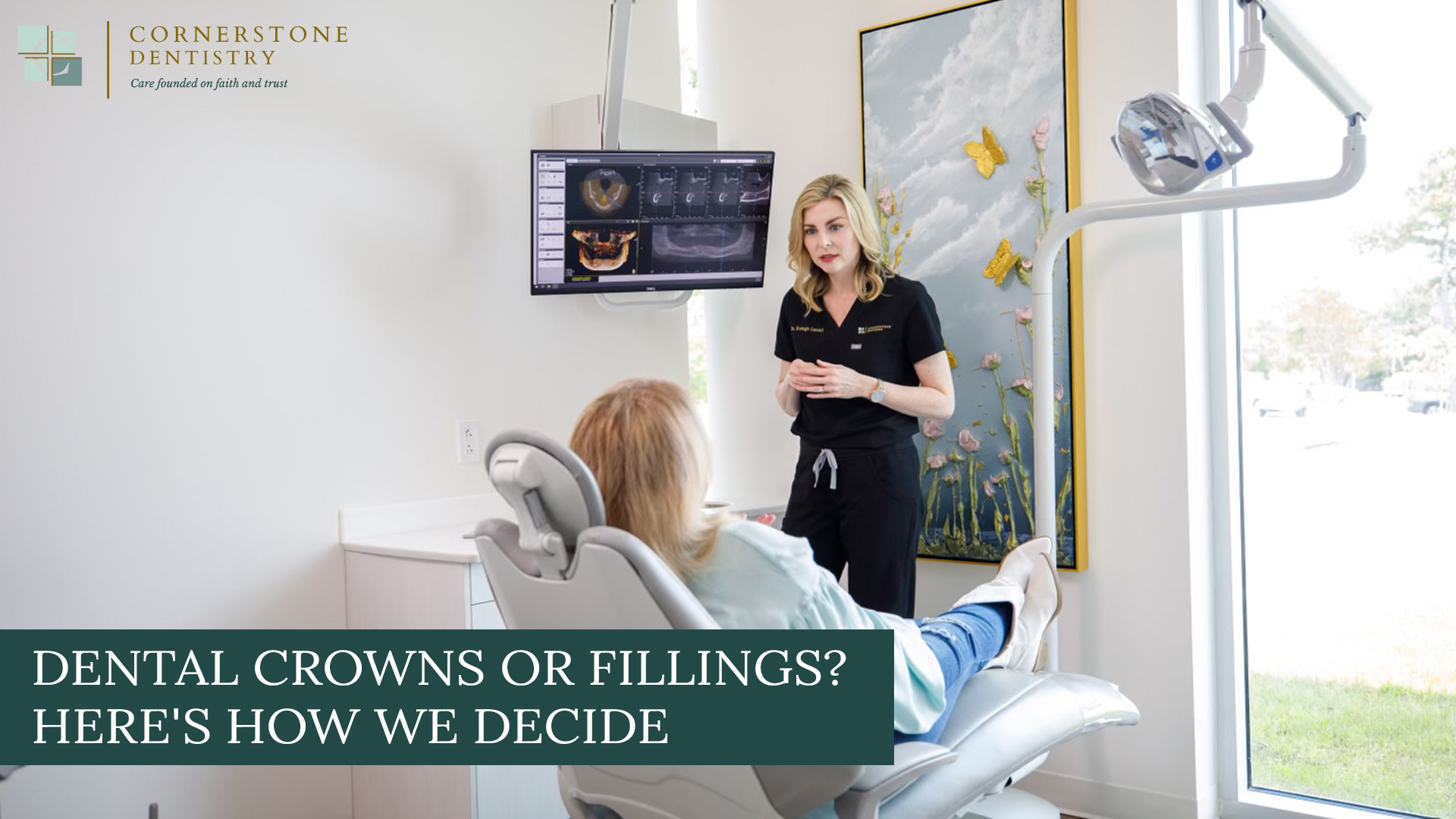
 If your dentist says you need “a crown” and you were expecting “just a filling,” it can feel like the recommendation jumped a few levels. Totally fair reaction. Crowns and fillings both fix damaged teeth, but they don’t do the same job. At Cornerstone Dentistry in Covington, we look at the same core question every time: What’s the most conservative option that will keep this tooth strong and comfortable long-term?
Below is a simple breakdown of how we decide.
Crowns vs fillings: the simple difference
- A filling repairs a portion of a tooth that has decay or minor damage. We remove the unhealthy area and replace it with a durable material so the tooth can function again.
- A crown is more like a protective “cap” that covers the tooth. Instead of fixing just one small area, a crown reinforces the tooth structure and helps prevent future cracking or failure when a tooth has been weakened.
Here’s the quick way to think about it:
- Fillings rebuild part of the tooth
- Crowns protect and reinforce most of the tooth
When a filling is usually the best choice
-
Small-to-medium cavities
If the cavity is small or moderate and the tooth still has a healthy amount of structure, a filling is often the best move. It’s efficient, conservative, and keeps more of your natural tooth intact. In many cases, the tooth can be cleaned, restored, and back in action quickly, without needing the added coverage of a crown.
-
Low bite pressure areas
Tooth location and how you chew matters. Some teeth take a beating (hello, molars). Others handle less pressure, especially if the damage is small. If a cavity is in an area that doesn’t take heavy bite force or if the tooth isn’t already compromised, a filling often holds up really well.
When a crown is usually the smarter long-term choice
-
Large cavities or old failing fillings
The bigger the cavity (or the bigger the existing filling), the more natural tooth has been removed over time. Teeth need a solid “shell” of enamel to stay strong. When that shell gets too thin, the risk of cracks and fractures goes up. A common situation we see: a patient has an older filling that’s getting worn, leaky, or breaking down. Replacing it with another large filling may not solve the bigger issue: the tooth is now structurally weak. In those cases, a crown can be a more reliable way to protect what’s left.
-
Cracked or weakened tooth structure
Cracks can be sneaky. Sometimes you feel a sharp zing when biting, or the tooth becomes sensitive, but X-rays don’t always show the full picture. If we suspect cracking or the tooth is weakened (especially around an older filling), a crown may be recommended to “brace” the tooth and reduce the chance of a bigger break later. This is particularly true for back teeth that handle strong chewing forces.
-
After root canal treatment
After a root canal, a tooth can become more brittle. It’s not that the tooth is “dead” in a scary way, but the inner nerve tissue is removed, and the tooth is no longer receiving the same sensation and internal moisture. Over time, that can increase fracture risk, especially for molars.
That’s why crowns are often recommended after root canals on back teeth: it’s about protecting your investment and keeping the tooth functional for years.
What we evaluate before recommending either option
A good recommendation isn’t based on a single factor. It’s a combination of what we see clinically, what you’re feeling, and what makes sense for long-term success.
-
Remaining tooth structure
This is the big one. If there’s plenty of healthy tooth left, a filling is often great. If the tooth is mostly filling material with thin walls of natural enamel around it, a crown may be safer. We’re essentially asking: Is this tooth strong enough to survive normal chewing without extra protection?
-
Bite forces and grinding/clenching
If you clench or grind your teeth (many people do, especially under stress), that changes the game. Strong bite forces can crack teeth that might otherwise be fine with a filling. We look for wear patterns, cracks, jaw tension, and your history. If you’ve broken teeth or restorations in the past, that’s also a clue.
-
Tooth location (front vs back)
Front teeth generally experience different forces than molars. Molars crush and grind; front teeth cut. A back tooth with a big cavity usually needs more reinforcement than a front tooth with a similar-sized cavity. Aesthetics also matter more on front teeth, so material choice and restoration design may change depending on where the tooth sits in your smile.
What the appointment process looks like
Filling visit basics
Most fillings are straightforward:
- Numb the area so you’re comfortable
- Remove decay and clean the tooth
- Place the filling material and shape it to your bite
- Polish and double-check your bite feels natural
You might have mild sensitivity for a short time afterward, especially to cold, but most people are back to normal quickly.
Crown timeline basics
Crowns typically happen in stages:
- We numb the area and prepare the tooth
- We take precise impressions/scans
- You leave with a temporary crown to protect the tooth
- You return for the final crown placement and bite adjustment
The goal is a crown that feels like your tooth again: comfortable, stable, and easy to chew with.
How we keep treatment conservative and honest
We’re not in the business of “upselling dentistry.” If a filling is truly the right option, we’ll say so. If a crown is recommended, it’s because we believe it offers the best chance of keeping the tooth healthy and functional long-term.
At Cornerstone Dentistry, we focus on:
- Clear explanations (we’ll show you what we’re seeing)
- Options when appropriate (with pros/cons)
- Long-term thinking, not short-term patch jobs
- Respect for your comfort and your budget realities
How to make crowns and fillings last longer
No restoration lasts forever, but you can dramatically improve lifespan with a few habits:
- Brush twice daily and floss (especially around crowns)
- Keep up with regular checkups and cleanings
- Address grinding/clenching with a nightguard if needed
- Avoid chewing ice and using teeth as tools (we’ve all done it)
- Call early if something feels “off” (small issues are easier to fix)
If you’ve been told you need a crown or a filling and you’re not sure why, we’re happy to walk you through it. The best plan is the one you understand and feel good about.
Crowns and fillings aren’t about “doing more” or “doing less.” They’re about choosing the option that gives your tooth the best chance to stay healthy, comfortable, and functional for the long run. When you understand why a recommendation is being made, the decision gets a lot easier.
If you’ve been told you need a crown or filling and want a clear explanation, we’re here to help.
Schedule a restorative consultation at Cornerstone Dentistry in Covington, LA, and we’ll walk you through your options so you can move forward with confidence.
Disclaimer: The content of this blog is not intended to be a substitute for professional medical advice, diagnosis, or treatment. Always seek the advice of qualified health providers with questions you may have regarding medical conditions. Your results may vary.