 Teeth whitening is one of the quickest ways to feel better about your smile. It’s also one of the easiest things to get disappointed by, usually because expectations were set by Instagram, not biology.
At Cornerstone Dentistry in Covington, we love whitening because it can be a simple, confidence-boosting upgrade. But we also want you to know what’s realistic, what affects your results, and how to keep the process comfortable and worth it.
What teeth whitening can and can’t do
Whitening can absolutely lift years of stains and brighten your natural tooth color. Most patients see a noticeable improvement, especially if their staining is from coffee, tea, wine, or tobacco.
What it can do:
- Brighten your natural tooth shade
- Reduce yellowing and surface stains
- Refresh your smile without drilling or removing tooth structure
What it can’t do:
- Change the color of crowns, veneers, or fillings
- Fix discoloration caused by certain medications or internal tooth damage in every case
- Make teeth “paper white” if your natural shade, enamel, or staining type won’t allow it
A good way to think about it: whitening works best when you’re trying to brighten what’s already there, not completely change your tooth color identity.
Why whitening results vary from person to person
Two people can do the exact same whitening and end up with different results. That’s normal. Here’s why.
-
Natural tooth shade and enamel thickness
Some teeth are naturally warmer in tone. Enamel can also be thinner for some people, which allows more of the underlying dentin (naturally more yellow) to show through. Whitening can still help, but the “ceiling” of how bright you can go might be different.
If your teeth started more yellow, you may see a dramatic change. If they started more gray or naturally darker, the change may be more subtle.
-
Staining sources (coffee, wine, smoking, etc.)
Not all stains behave the same. Surface stains from coffee, tea, red wine, and smoking usually respond well. If you’ve had heavy staining for many years, you may need a longer whitening plan or touch-ups to reach (and keep) your goal.
One quick note: it’s not just what you drink, it’s how often, and how long it sits. Sipping on coffee all morning tends to stain more than having it once and being done.
-
Age and past dental work
As we age, enamel naturally wears down a bit, and teeth can darken. Whitening still works for many adults, but it may take more time and planning.
Past dental work also matters. If you have visible fillings, crowns, or veneers in your smile zone, whitening your natural teeth may make those restorations stand out more. That doesn’t mean you can’t whiten, it just means we should plan it the right way.
In-office vs take-home whitening: what to expect from each
There’s no one “best” option. It depends on your goals, your timeline, and how sensitive your teeth are.
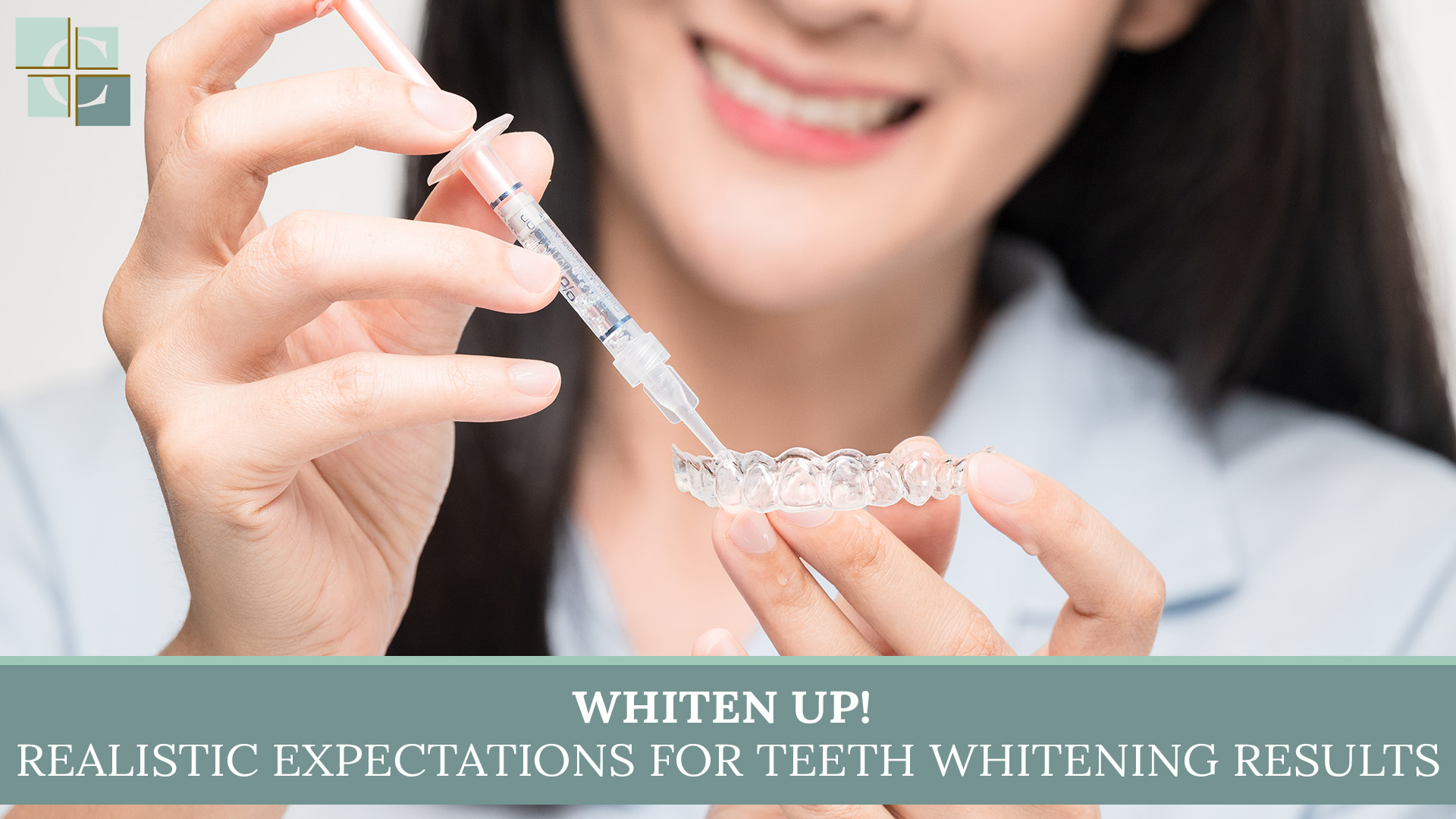
- In-office whitening is great if you want a faster, more controlled jump in brightness. It’s done under professional supervision, and many patients like the immediate payoff. You’ll often see a strong improvement in a single visit, though some people still benefit from take-home trays afterward to fine-tune the shade.
- Take-home whitening usually delivers more gradual results. It’s ideal if you want flexibility, want to ease into the process, or tend to be sensitive. It also gives you a built-in way to maintain your results later without starting from scratch.
If you’re aiming for a big change quickly, in-office can be a great start. If you prefer a slower, controlled brightening, take-home can be the better fit.
Managing sensitivity (and preventing it)
Sensitivity is the most common reason people quit whitening early, and it’s also one of the most avoidable.
Why sensitivity happens
Whitening products temporarily open tiny pathways in the enamel so oxygen can break down stain molecules. During that window, your teeth may feel more reactive to cold air, cold drinks, or sweets. It’s usually temporary, but it can be intense if you already have sensitivity, recession, or microscopic cracks.
Simple ways we reduce discomfort
A few practical strategies make a big difference:
- Start with a lower strength or shorter wear time, then increase gradually
- Use a sensitivity toothpaste for 1–2 weeks before whitening
- Take “off days” between whitening sessions if you start feeling zingy
- Avoid super cold drinks during your whitening window
- Make sure there aren’t underlying issues like cavities or exposed root surfaces first
This is also where guidance matters. Whitening is easiest when the plan is tailored to your teeth, not a one-size-fits-all strip routine.
Whitening with crowns, fillings, and veneers
This part is where people get surprised, so it’s worth stating clearly.
Why restorations don’t whiten
Crowns, fillings, and veneers are made from materials that don’t respond to whitening gel the way natural enamel does. Your natural teeth can brighten, but those restorations will stay the same color they were when placed.
How to match shades the right way
If you have restorations in the front of your smile, we usually recommend a simple strategy:
- Decide the shade you want your natural teeth to reach
- Whiten first (if whitening is part of your plan)
- Then match any new crowns/veneers/fillings to the new shade
If you already have a crown that’s visible and you whiten your teeth significantly, you may eventually want to replace that crown to match. The key is planning so you don’t end up frustrated.
How long whitening lasts (and how to maintain it)
Whitening isn’t permanent, but it can last a long time with basic maintenance. For many people, results last anywhere from several months to a couple of years, depending on habits.
To make results last:
- Rinse with water after coffee or wine
- Use a straw when you can (especially for iced coffee)
- Don’t brush immediately after acidic drinks (wait 30 minutes)
- Keep up with cleanings (they remove surface stain buildup)
- Do occasional touch-ups with trays if you have them
Think of whitening like a haircut: you don’t redo your whole head every week, but a little maintenance keeps it looking fresh.
When whitening isn’t the best next step
Sometimes whitening isn’t the right tool, and that’s okay. We may recommend alternatives if:
- You have untreated cavities or gum inflammation
- You have significant sensitivity or recession that needs care first
- Discoloration is internal (from trauma or certain medications)
- The real issue is uneven color due to old restorations or enamel defects
In those cases, you might be happier with a different cosmetic plan (like bonding, veneers, or simply replacing an old visible filling).
If you’re thinking about whitening and want results you’ll actually feel good about, we can help you choose the right approach, avoid sensitivity surprises, and plan around any existing dental work. The goal is a brighter smile, not a frustrating one.
Ready to brighten your smile without guesswork?
Schedule a whitening consultation at Cornerstone Dentistry in Covington and let’s create a plan that actually fits your teeth, your goals, and your comfort level.
Disclaimer: The content of this blog is not intended to be a substitute for professional medical advice, diagnosis, or treatment. Always seek the advice of qualified health providers with questions you may have regarding medical conditions. Your results may vary.